
How to Spot Fake Lapis Lazuli: 5 Simple Tests for Collectors
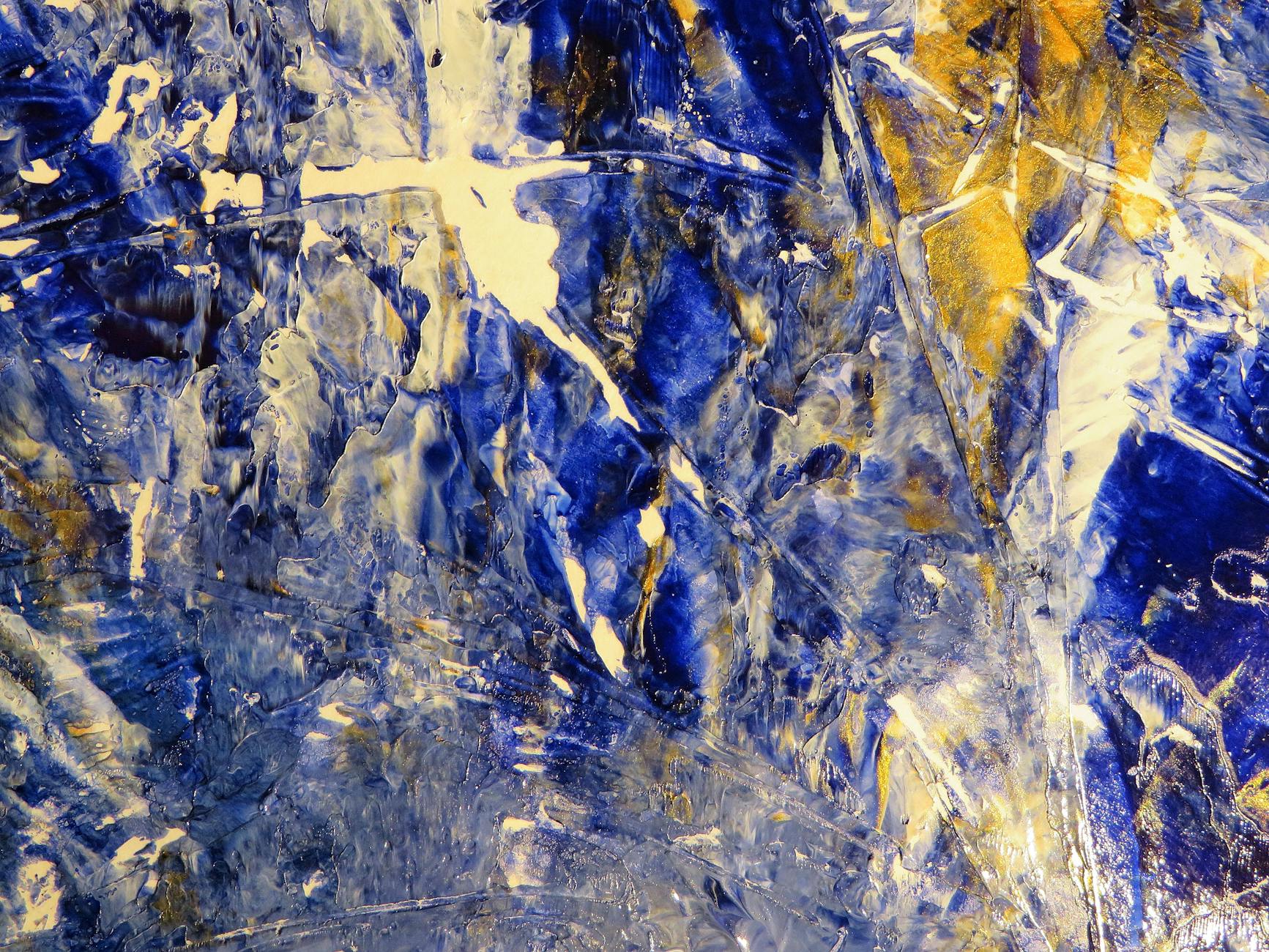
To understand why these tests work, we have to look at the stone’s DNA. Genuine Lapis Lazuli is not a single mineral, but a complex metamorphic rock. Its famous ‘heavenly’ blue comes from the presence of Lazurite, a silicate mineral that is impossible to replicate perfectly in a laboratory or with cheap dyes.
Before you buy, it’s essential to understand the history and geology of this stone in our Ultimate Lapis Lazuli Guide
Knowing what makes a stone authentic is the only way to protect your investment. Here are five practical ways to identify real Badakhshan Lapis.
1. The Acetone (Nail Polish Remover) Test
This is the most effective way to spot a dyed stone.
- The Method: Dip a cotton swab in pure acetone or nail polish remover and gently rub an inconspicuous area of the stone.
- The Result: If the cotton turns blue, the stone has been dyed. Authentic Badakhshan Lapis is naturally blue all the way through; its color will never “rub off.”
2. The Temperature Check
Natural gemstones are excellent conductors of heat.
- The Method: Hold the stone in your hand or touch it to your cheek.
- The Result: Real Lapis will feel noticeably cold to the touch and take a long time to warm up. Plastic, resin, or glass imitations will warm up almost instantly against your skin.
3. Inspecting the “Gold” (Pyrite) Stars
One of the hallmarks of Lapis from the Hindu Kush is the presence of Pyrite.
- Real Lapis: The pyrite flecks look like tiny, irregular “gold” stars embedded inside the stone.
- Fake Lapis: In imitations, “pyrite” is often painted on or consists of flat, circular glitter. If the gold looks like it’s sitting on the surface, it’s a fake.
4. The White Calcite Veining
While the highest “Nili” grade has very little white, most natural Lapis contains some Calcite (white streaks).
- The Method: Look at the stone under a magnifying glass.
- The Result: Real stone has “mottled” or organic patterns where the white and blue mix. If the stone is a solid, “electric” blue with no variation at all, it is likely a synthetic “Sintered” material.
5. Comparison Table: Real vs. Fake
| Feature | Authentic Badakhshan Lapis | Synthetic / Dyed Imitations |
| Color Depth | Deep Azure (Royal Blue) | Uniform or “Ink” Blue |
| Weight | Heavy and dense | Light (Resin) or very heavy (Glass) |
| Surface | Slightly grainy under a loupe | Perfectly smooth and glassy |
| Origin | Traceable to Badakhshan | Usually unknown or “China” |
Conclusion: Buy from the Source
Imitations are becoming more sophisticated, but they can never replicate the 6,000-year-old soul of a stone from the Sar-e-Sang mines. To ensure you are receiving a 100% natural, untreated gemstone, always ask for a Certificate of Origin.
Ready to see the real thing? Explore our collection of authentic Lapis Lazuli.