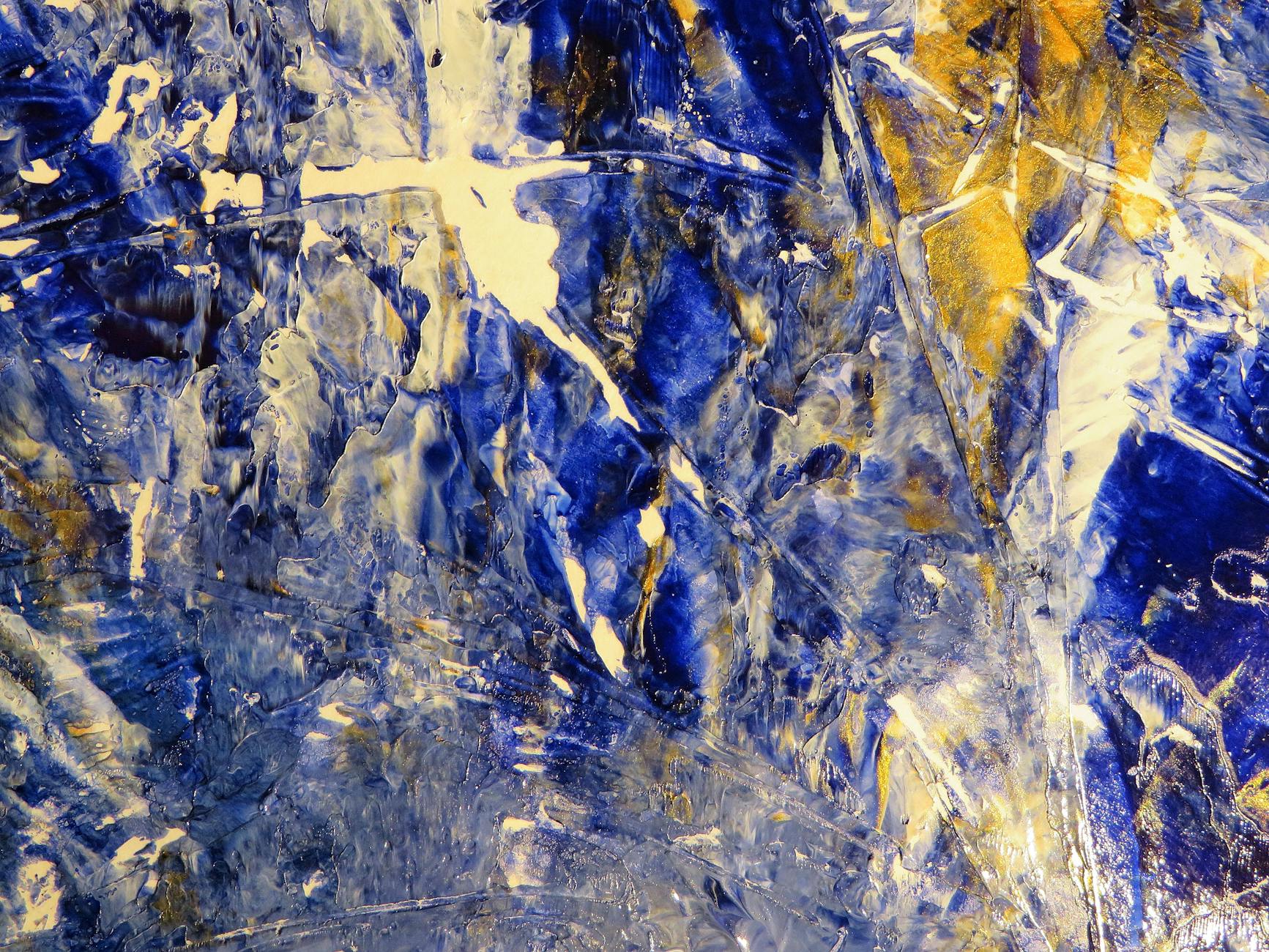

For over 6,000 years, the deep blue of Lapis Lazuli has defined the history of luxury and spirituality. Long before it was a centerpiece in modern jewelry at Badakhshan-E-Bazaar, this stone from the legendary Sar-e-Sang mines was the source of the world’s most expensive pigment. If you want to know the science behind the stone first, check out our Ultimate Lapis Lazuli Guide .
Quick Fact: Lapis Lazuli from the Sar-e-Sang mines has been used in art for over 6,000 years. It was the source of Ultramarine, the most expensive pigment of the Renaissance, used by masters like Michelangelo and Johannes Vermeer because its deep blue color never fades.
The Blue of Ancient Kings and Pharaohs
In Ancient Egypt, Lapis Lazuli was considered the “Stone of Heaven.” It was more than decoration; it was a protective talisman. The most famous example is King Tutankhamun’s Funeral Mask, where the eyebrows and eye-surrounds are inlaid with pure Afghan Lapis. Egyptians believed the gold-colored pyrite flecks represented stars in a divine night sky.
Ultramarine: The Pigment More Costly Than Gold
During the Renaissance, Lapis Lazuli was ground into a powder called Ultramarine (meaning “from beyond the sea”). Because the stone had to travel via the Silk Road from the mountains of Badakhshan to Venice, the cost was astronomical—often exceeding the price of gold.
- Johannes Vermeer: In his masterpiece, Girl with a Pearl Earring, the brilliant blue headscarf was painted using natural Ultramarine. Vermeer was famous for going into debt to afford this high-grade pigment.
- Michelangelo: In the Sistine Chapel, the vast blue background of The Last Judgment relies on Lapis Lazuli. Recent restorations in 2026 have confirmed that Michelangelo used the “dry” (secco) technique to apply the Lapis to ensure the blue remained vivid for centuries.
The Modern Legacy of Afghan Lapis
Today, while synthetic pigments are common, the “spirit” of natural Lapis Lazuli remains unmatched. Whether in a Renaissance fresco or a handcrafted ring, the deep indigo of the Hindu Kush mountains carries a weight of history that no laboratory can replicate.
Own a piece of history. Browse our collection of Authentic Badakhshan Lapis Lazuli Jewelry and find a stone that carries the legacy of the Pharaohs.
Expert Tip: Because of its historic value, many “fakes” exist today. Read our guide on How to Spot Fake Lapis Lazuli to protect your investment.